This has absolutely nothing to do with the environment except that it made mine happier: My husband is home from a year long deployment!!! Don't expect to hear from me for a few days, but then after that I may be able to write more because he's here to help with Doodlebug.
Wooohhooooo! Thank you God for my husband coming home!
Sunday, August 16, 2009

Thursday, August 6, 2009
The River

There is a river that runs right through the center of my town. When I was a little girl, we lived right down the street from it, and sometimes when it rained the water would run up over the road, rushing and rushing, covering the bridge. My parents would take us down to see the river, always keeping us back a safe distance (though I'm sure my brother tried to get closer). The river was normally pretty small, but when it flooded it was something to be afraid of as well as something to be admired. It was wild and untamed and, to me, beautiful.
As an adult I came back to this little town and my little river and cried. What had happened to my river? It was choked with trash, and nearly dry from drought and damming. In my childhood, had I imagined the grandeur of the river? In my smallness, had I seen the river as larger than it was? Maybe. But something tells me I didn't. I remember the river washing away a car once. Now it is a tiny trickle, the land around it parched and cracked.
And so I cry for my river, and I cry for my daughter, who will never get to see it the way I once did, majestic and powerful and free.
Tuesday, August 4, 2009
Why Eat Local Foods
photo credit: sbocaj
Economic Impact of Local Foods
According to Sandor Ellix Katz, “… (G)lobalized corporate food follows a long and largely inscrutable chain of transactions, most of which is invisible to the consumer. In this food system, only a tiny proportion of what consumers spend on food at the store goes to the people who grow it. The bulk of our food spending immediately departs from our local communities into the unfathomably huge infrastructures of the shipping and trucking, food processing, marketing, and retailing industries… Rather than paying for food itself, we are paying for an elaborate system for getting it to the right place, at the right time, in the right processed form, and in the right package” (Katz 2).
Many people hearing about local food automatically think organic. But local food has very little to do with organic. You could run out to Wal-Mart and buy organic fruit and think you have done your part. When people buy food, though, they should really consider where their money is going. “A dollar spent on organic plums at Wal-Mart goes to corporate headquarters in Bentonville, Arkansas, to the real-estate developer who owns the land the store is built on, to the truckers who brought it there, and as a small fraction of that dollar, to the grower and the cashier.”
But there is a better way. “In the traditional local food system, wealth (in the form of food) is created locally, from the land worked by the people. The money people spend on food in that context gets recirculated locally, and food production is a significant generator of economic activity: it supports local mechanics, babysitters, craftspeople, and other local food producers. In economics, this phenomenon is called the multiplier effect. A dollar spent on a local grower’s produce will continue to circulate locally and multiply its benefits through economic stimulation”(Katz 1). In other words, the dollar spent at Wal-Mart on organic plums went directly to the corporation. The dollar spent on plums at a local farmers marker went directly to the grower, and thus, out into our community. The local plums may not have the label organic due to the hassle of government organics standards, but chances are they are grown without chemicals. And if you aren’t sure about growing practices, you can always ask the farmer!
Environmental Impact of Local Foods
It really doesn’t do much good to buy organic food that has to be shipped all over the country, or the world. It is exposed to chemicals in shipping, as well as wasting precious fossil fuel resources. According to SustainableTable.org,”(a) tremendous amount of fossil fuel is used to transport foods such long distances. Combustion of these fuels releases carbon dioxide, sulfur dioxide, particulate matter and other pollutants into the atmosphere, contributing to global climate change, acid rain, smog and air pollution. Even the refrigeration required to keep your fruits, vegetables, dairy products and meats from spoiling burns up energy.” In addition, industrial food producers use large amounts of plastic packaging, which is non-biodegradable and nearly impossible to recycle.
The shipping of industrial food is not the only part that causes environmental problems. The actual growing of the food itself harms the environment. While many small farmers who sell locally grow many different types of produce and practice sustainable agriculture, industrial farms favor monocropping, or only growing one type of plant. “… Single crops, as the Irish learned the hard way with the potato blight in 1845, are more susceptible to devastation by pest invasion and disease. The industrial answer is herbicides, fungicides, and pesticides to kill weeds, insects, and molds. So powerful are these chemicals, industrial farmers have dispensed with crop rotation—the age-old method for keeping pests and disease at bay—but the apparent efficiency is illusory. With this system, pests and pathogens traditionally kept in check by switching crops accumulate, thus requiring yet more pesticides” (Planck 146-147). Buying local foods sends a message to these environmentally irresponsible large growers that people won’t stand for it anymore, and it is time to make a change to more responsible, sustainable farming.
Nutritional Effects of Local Food
Since food travels further from field to table than ever before, “greater time elapses between harvest and consumption, during which nutrients are diminished” (Katz 5). According to SustainableTable.org, “fresh food from local farms is healthier than industrially-farmed products because the food doesn’t spend days in trucks and on store shelves losing nutrients… Food transported short distances is fresher (and, therefore, safer) than food that travels long distances. Local food has less of an opportunity to wilt and rot whereas large-scale food manufacturers must go to extreme lengths to extend shelf-life since there is such a delay between harvest and consumption. Preservatives are commonly used to keep foods stable longer, and are potentially hazardous to human health.”
Another health problem encountered with industrial food distribution is food-borne diseases. Consider the 2006 outbreak of E-coli from spinach. All that spinach came from a single region in California, but was spread throughout the country! The disease would have been contained if the food was distributed locally, and would have less likely led to the widespread panic the outbreak caused.
Industrial foods such as ground beef could be a problem as well. Meat from hundreds of cows is all mixed together. One sick cow could contaminate thousands of pounds of ground beef, which is then shipped all over America! In contrast, if you buy ground beef locally, it is very easy to know which cow caused the contamination and get that food off the market!
Fun, Tasty Effects of Local Foods
Local foods just taste better! Typical food from your supermarket is picked underripe to survive the journey to the grocery store, then artificially ripened. Local foods can be picked at the peak of perfection for the most amazing taste experience!
It is not hard to eat local foods, despite the adjustment period of not eating strawberries in December. Just start out trying to buy foods grown in your state. Find a grocery store based in the state you live in. Or try a farmers market. Quit shopping at Wal-Mart. When you have the choice between domestic food and imported, choose the domestic one! Now that I have begun my own transition to local foods, I see how very easy it is to do, and how important it is to make a difference. I will admit that I’m not a total localvore (yet), but I try to do my part and buy as locally as possible.
Sources
Katz, Sandor Ellix. The Revolution Will Not Be Microwaved. Chelsea Green, 2006.
Planck, Nina. Real Food: What to Eat and Why. Bloomsbury USA, 2007.
SustainableTable.Org. “The Issues: Buy Local.” http://www.sustainabletable.org/issues/buylocal/. Accessed April 27, 2008.
According to Sandor Ellix Katz, “… (G)lobalized corporate food follows a long and largely inscrutable chain of transactions, most of which is invisible to the consumer. In this food system, only a tiny proportion of what consumers spend on food at the store goes to the people who grow it. The bulk of our food spending immediately departs from our local communities into the unfathomably huge infrastructures of the shipping and trucking, food processing, marketing, and retailing industries… Rather than paying for food itself, we are paying for an elaborate system for getting it to the right place, at the right time, in the right processed form, and in the right package” (Katz 2).
Many people hearing about local food automatically think organic. But local food has very little to do with organic. You could run out to Wal-Mart and buy organic fruit and think you have done your part. When people buy food, though, they should really consider where their money is going. “A dollar spent on organic plums at Wal-Mart goes to corporate headquarters in Bentonville, Arkansas, to the real-estate developer who owns the land the store is built on, to the truckers who brought it there, and as a small fraction of that dollar, to the grower and the cashier.”
But there is a better way. “In the traditional local food system, wealth (in the form of food) is created locally, from the land worked by the people. The money people spend on food in that context gets recirculated locally, and food production is a significant generator of economic activity: it supports local mechanics, babysitters, craftspeople, and other local food producers. In economics, this phenomenon is called the multiplier effect. A dollar spent on a local grower’s produce will continue to circulate locally and multiply its benefits through economic stimulation”(Katz 1). In other words, the dollar spent at Wal-Mart on organic plums went directly to the corporation. The dollar spent on plums at a local farmers marker went directly to the grower, and thus, out into our community. The local plums may not have the label organic due to the hassle of government organics standards, but chances are they are grown without chemicals. And if you aren’t sure about growing practices, you can always ask the farmer!
Environmental Impact of Local Foods
It really doesn’t do much good to buy organic food that has to be shipped all over the country, or the world. It is exposed to chemicals in shipping, as well as wasting precious fossil fuel resources. According to SustainableTable.org,”(a) tremendous amount of fossil fuel is used to transport foods such long distances. Combustion of these fuels releases carbon dioxide, sulfur dioxide, particulate matter and other pollutants into the atmosphere, contributing to global climate change, acid rain, smog and air pollution. Even the refrigeration required to keep your fruits, vegetables, dairy products and meats from spoiling burns up energy.” In addition, industrial food producers use large amounts of plastic packaging, which is non-biodegradable and nearly impossible to recycle.
The shipping of industrial food is not the only part that causes environmental problems. The actual growing of the food itself harms the environment. While many small farmers who sell locally grow many different types of produce and practice sustainable agriculture, industrial farms favor monocropping, or only growing one type of plant. “… Single crops, as the Irish learned the hard way with the potato blight in 1845, are more susceptible to devastation by pest invasion and disease. The industrial answer is herbicides, fungicides, and pesticides to kill weeds, insects, and molds. So powerful are these chemicals, industrial farmers have dispensed with crop rotation—the age-old method for keeping pests and disease at bay—but the apparent efficiency is illusory. With this system, pests and pathogens traditionally kept in check by switching crops accumulate, thus requiring yet more pesticides” (Planck 146-147). Buying local foods sends a message to these environmentally irresponsible large growers that people won’t stand for it anymore, and it is time to make a change to more responsible, sustainable farming.
Nutritional Effects of Local Food
Since food travels further from field to table than ever before, “greater time elapses between harvest and consumption, during which nutrients are diminished” (Katz 5). According to SustainableTable.org, “fresh food from local farms is healthier than industrially-farmed products because the food doesn’t spend days in trucks and on store shelves losing nutrients… Food transported short distances is fresher (and, therefore, safer) than food that travels long distances. Local food has less of an opportunity to wilt and rot whereas large-scale food manufacturers must go to extreme lengths to extend shelf-life since there is such a delay between harvest and consumption. Preservatives are commonly used to keep foods stable longer, and are potentially hazardous to human health.”
Another health problem encountered with industrial food distribution is food-borne diseases. Consider the 2006 outbreak of E-coli from spinach. All that spinach came from a single region in California, but was spread throughout the country! The disease would have been contained if the food was distributed locally, and would have less likely led to the widespread panic the outbreak caused.
Industrial foods such as ground beef could be a problem as well. Meat from hundreds of cows is all mixed together. One sick cow could contaminate thousands of pounds of ground beef, which is then shipped all over America! In contrast, if you buy ground beef locally, it is very easy to know which cow caused the contamination and get that food off the market!
Fun, Tasty Effects of Local Foods
Local foods just taste better! Typical food from your supermarket is picked underripe to survive the journey to the grocery store, then artificially ripened. Local foods can be picked at the peak of perfection for the most amazing taste experience!
It is not hard to eat local foods, despite the adjustment period of not eating strawberries in December. Just start out trying to buy foods grown in your state. Find a grocery store based in the state you live in. Or try a farmers market. Quit shopping at Wal-Mart. When you have the choice between domestic food and imported, choose the domestic one! Now that I have begun my own transition to local foods, I see how very easy it is to do, and how important it is to make a difference. I will admit that I’m not a total localvore (yet), but I try to do my part and buy as locally as possible.
Sources
Katz, Sandor Ellix. The Revolution Will Not Be Microwaved. Chelsea Green, 2006.
Planck, Nina. Real Food: What to Eat and Why. Bloomsbury USA, 2007.
SustainableTable.Org. “The Issues: Buy Local.” http://www.sustainabletable.org/issues/buylocal/. Accessed April 27, 2008.
Saturday, August 1, 2009
Tuesday, July 14, 2009
Book Review-- The Complete Organic Pregnancy
I cannot recommend The Complete Organic Pregnancy enough to anyone who is new to the organic/natural lifestyle. Deirdre Dolan and Alexandra Zissu cover in depth everything from beauty products to furniture to food. It covers from the "preparing for pregnancy stage" to after the baby is born, but I don't just recommend it to pregnant or trying-to-become-pregnant women. It is the ultimate resource for anyone beginning to pursue the organic life (you might warn your husband first, though, if you're reading it and not pregnant. ;) ).
A little word of warning though: if you are offended by cursing, there are a few not-so-nice words in some of the diary entries (which are included as side stories).
I love this book, and I have read it multiple times to get ideas of what to eliminate next from my chemical-laden life. I highly recommend it.
A little word of warning though: if you are offended by cursing, there are a few not-so-nice words in some of the diary entries (which are included as side stories).
I love this book, and I have read it multiple times to get ideas of what to eliminate next from my chemical-laden life. I highly recommend it.
Sunday, July 12, 2009
Small Steps: Big Impact-- Razors
Switch your disposable razors for one with a replaceable head to reduce waste. Or better yet, switch to an electric razor so you aren't throwing anything away.
I just switched to a razor with a replaceable head, but I'm thinking I may go to electric soon. I think it would be more convenient as Doodlebug has a limited lack-of-attention span and my showers are pretty rushed.
I just switched to a razor with a replaceable head, but I'm thinking I may go to electric soon. I think it would be more convenient as Doodlebug has a limited lack-of-attention span and my showers are pretty rushed.
Friday, July 10, 2009
Grocery Goals
photo credit: D Sharon Pruitt
In my quest to live a more natural lifestyle and eat healthier foods, I have found it is too easy to get overwhelmed with "rules". I am new to all of this, and I have my weaknesses (hello, Digiorno!), so as I shop I am trying to keep in mind that my ideals are goals, not rules. Here are my current goals. As time goes on I'll add more and become more strict about them, but for now, here are my current goals.
~No high fructose corn syrup.
~No artificial dyes (a color with a number after it).
~No high fructose corn syrup.
~No artificial dyes (a color with a number after it).
~No trans fats (hydrogenated anything).
~No MSG (this is a biggy for me because I am sensitive to it in large doses, but small amounts seem to be in everything!)
~Try to buy organics or skip the "dirty dozen" fruits and veggies.
~Soy should not be a main ingredient (I'll allow it for now if it's far down on the ingredient list. Eventually I'd like to completely eliminate it).
It is important to me for Doodlebug to start out eating healthy foods, and it's up to me (since I'm doing most of the cooking) to set a good example for her. The main goal is to get rid of as much processed food as I can, and my mini-goals will help me get there one step at a time.
~No MSG (this is a biggy for me because I am sensitive to it in large doses, but small amounts seem to be in everything!)
~Try to buy organics or skip the "dirty dozen" fruits and veggies.
~Soy should not be a main ingredient (I'll allow it for now if it's far down on the ingredient list. Eventually I'd like to completely eliminate it).
It is important to me for Doodlebug to start out eating healthy foods, and it's up to me (since I'm doing most of the cooking) to set a good example for her. The main goal is to get rid of as much processed food as I can, and my mini-goals will help me get there one step at a time.
Friday, July 3, 2009
Making the switch to cloth
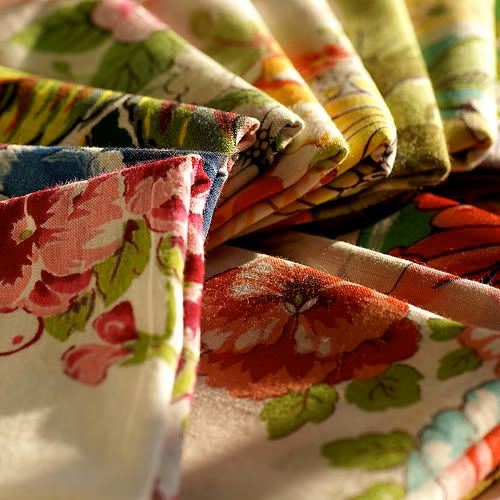
I have been using cloth grocery bags for a while now, but with my discovery of cloth diapers, I started changing everything I could over to cloth, non-disposable options.
Paper towels- I was already using microfiber cloths for most of my cleaning. I do keep paper towels, but I only use them for things like draining bacon. When they run out, I don't plan on buying any more.
Diapers- Obviously, I use cloth. I still have a stash of 'sposies from my pre-cloth days, but, same as the paper towels, when they run out I'm not buying more. I really only use them for things like long car trips, when it wouldn't be safe to pull over to change Doodlebug's diaper. Disposables are more absorbent, so she can last 'til I can get to a gas station.
Facial tissue- I have really bad allergies and I seriously blow my nose a LOT. And cheapy tissue doesn't cut it, so I was spending a ton of money on the soft lotiony kind of tissue. I was going to sew myself some cloth hankerchiefs (which would NOT have been pretty. I can't sew.), but my mom found me a whole bunch of vintage hankies at an auction for a dollar. They are so soft and much sturdier than a tissue.
Girly stuff- No details here. Suffice it to say: Cloth nursing pads and mama cloth.
Toilet paper?- Yes, I'm totally going there. This is my latest switch. I thought I would have a hard time with this one, but I haven't. You can buy cloth toilet paper online or make it yourself with flannel and buy a nice wetbag, but I just went out and bought two 18-packs of washcloths and use a mop bucket to throw them in. You probably need a wet bag if you don't plan on washing very often, but it's not really a problem if you are already washing diapers. This post has a great explanation of how one woman does it. And no, it's not gross. I think it's a whole lot nicer than a dry square of paper. And if you can wipe your baby's bottom with cloth, you can wipe your own with it, too.
Paper towels- I was already using microfiber cloths for most of my cleaning. I do keep paper towels, but I only use them for things like draining bacon. When they run out, I don't plan on buying any more.
Diapers- Obviously, I use cloth. I still have a stash of 'sposies from my pre-cloth days, but, same as the paper towels, when they run out I'm not buying more. I really only use them for things like long car trips, when it wouldn't be safe to pull over to change Doodlebug's diaper. Disposables are more absorbent, so she can last 'til I can get to a gas station.
Facial tissue- I have really bad allergies and I seriously blow my nose a LOT. And cheapy tissue doesn't cut it, so I was spending a ton of money on the soft lotiony kind of tissue. I was going to sew myself some cloth hankerchiefs (which would NOT have been pretty. I can't sew.), but my mom found me a whole bunch of vintage hankies at an auction for a dollar. They are so soft and much sturdier than a tissue.
Girly stuff- No details here. Suffice it to say: Cloth nursing pads and mama cloth.
Toilet paper?- Yes, I'm totally going there. This is my latest switch. I thought I would have a hard time with this one, but I haven't. You can buy cloth toilet paper online or make it yourself with flannel and buy a nice wetbag, but I just went out and bought two 18-packs of washcloths and use a mop bucket to throw them in. You probably need a wet bag if you don't plan on washing very often, but it's not really a problem if you are already washing diapers. This post has a great explanation of how one woman does it. And no, it's not gross. I think it's a whole lot nicer than a dry square of paper. And if you can wipe your baby's bottom with cloth, you can wipe your own with it, too.
Thursday, July 2, 2009
Crunchy Living
This started out as my adventure to save the planet. I didn't expect huge changes in every product I used. It was simply my goal to reduce consumption and waste and encourage other people to do so as well. I so desperately want there to be a planet left for my little girl when she grows up.
The more research I have done, though, the more I have discovered that there is more to it than that. I have started to think about the chemicals in our food, and what we put on our bodies (at this stage Doodlebug puts everything in her mouth, so anything on my skin or hair goes directly into her mouth). So there will be more posts on natural alternatives from time to time as well.
It is all intertwined, I think. Once you start trying to be more environmentally friendly, you naturally progress to being more natural in every aspect. Sometimes it works the other way around. Some people are worried about their health and try to do "natural" things, which leads to an interest in being environmentally friendly.
Right now I am working on:
Reducing my consumption, thereby reducing waste.
Reducing water consumption.
Switching to more organic and locally grown foods.
Learning about alternatives to commercial cosmetic products.
Recycling everything I can.
Container gardening.
And constantly, constantly learning what I can do next. It is a never-ending battle. But hopefully I can make a difference; hopefully I can spread the word.
The more research I have done, though, the more I have discovered that there is more to it than that. I have started to think about the chemicals in our food, and what we put on our bodies (at this stage Doodlebug puts everything in her mouth, so anything on my skin or hair goes directly into her mouth). So there will be more posts on natural alternatives from time to time as well.
It is all intertwined, I think. Once you start trying to be more environmentally friendly, you naturally progress to being more natural in every aspect. Sometimes it works the other way around. Some people are worried about their health and try to do "natural" things, which leads to an interest in being environmentally friendly.
Right now I am working on:
Reducing my consumption, thereby reducing waste.
Reducing water consumption.
Switching to more organic and locally grown foods.
Learning about alternatives to commercial cosmetic products.
Recycling everything I can.
Container gardening.
And constantly, constantly learning what I can do next. It is a never-ending battle. But hopefully I can make a difference; hopefully I can spread the word.
Wednesday, July 1, 2009
Snappi Troubleshooting
I took pictures for this post, but unfortunately photobucket is loading really slowly today, so I'm just going to have to explain it the best I can and link to other pictures. Sorry for the inconvenience. Click on the links if you don't understand something I'm saying.
I love my Snappis,which keep me from worrying about poking Doodlebug with a diaper pin, but I will admit I have had a couple of problems with them. Here is how I solved them.
The middle claw gets in the way.
It just dangled there. I never could get the thing to truly hook on so it wouldn't come off. The directions say not to cut it or you will weaken it. So I didn't. But you can very easily pry the hard plastic claw out of the rubbery plastic so it won't poke. My Snappis just have a dangly piece in the middle with no claw, but it doesn't get in the way.
I am using cheap diapers and the Snappi pokes through.
I use Gerber prefold diapers, which are very thin and don't work so well with a Snappi. I thought I was doomed to diaper pins until I discovered the safety feature on the new Snappis. You know the little round tab on the top? When they aren't being used this pulls down over the claws to prevent poking. I pulled it down (see the second picture here) and just use it like this. It makes it not poke down so deep so it doesn't go through the diapers. You absolutely HAVE to use a diaper cover if you do this, though, because the corners of the claw are exposed.
Hopefully that made some semblance of sense with no pics. If you have a cloth diapering problem or solution, let me know. I'd be glad for the wisdom and would love to share what you know!
I love my Snappis,which keep me from worrying about poking Doodlebug with a diaper pin, but I will admit I have had a couple of problems with them. Here is how I solved them.
The middle claw gets in the way.
It just dangled there. I never could get the thing to truly hook on so it wouldn't come off. The directions say not to cut it or you will weaken it. So I didn't. But you can very easily pry the hard plastic claw out of the rubbery plastic so it won't poke. My Snappis just have a dangly piece in the middle with no claw, but it doesn't get in the way.
I am using cheap diapers and the Snappi pokes through.
I use Gerber prefold diapers, which are very thin and don't work so well with a Snappi. I thought I was doomed to diaper pins until I discovered the safety feature on the new Snappis. You know the little round tab on the top? When they aren't being used this pulls down over the claws to prevent poking. I pulled it down (see the second picture here) and just use it like this. It makes it not poke down so deep so it doesn't go through the diapers. You absolutely HAVE to use a diaper cover if you do this, though, because the corners of the claw are exposed.
Hopefully that made some semblance of sense with no pics. If you have a cloth diapering problem or solution, let me know. I'd be glad for the wisdom and would love to share what you know!
Subscribe to:
Posts (Atom)


